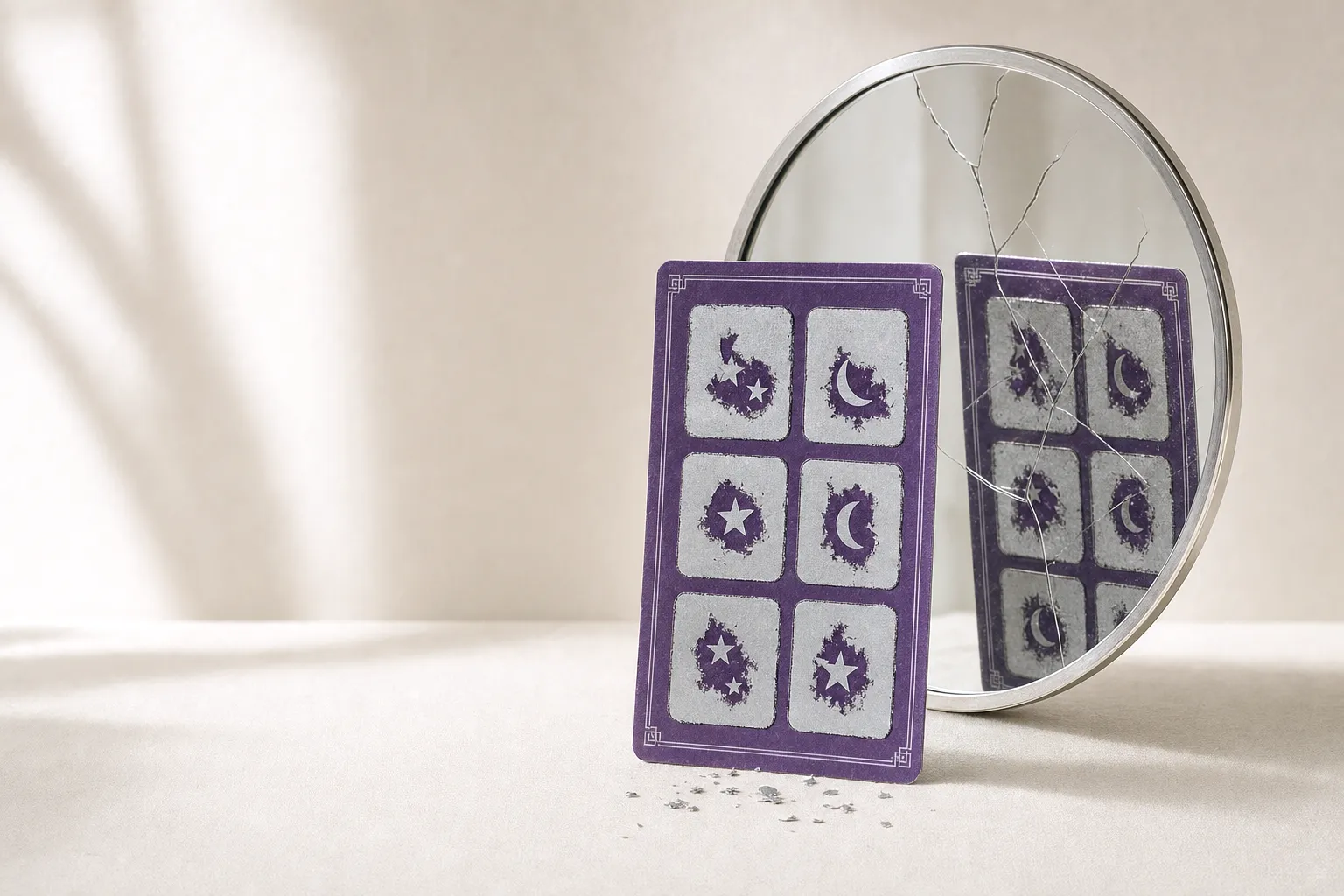
Search for a fake scratch card and three different things come back mixed together: novelty cards people make for a surprise, scam messages that use a scratch card prize as bait, and websites that imitate a gambling brand. Each needs a different response.
| Kind | What it is | Typical sign | What to do |
|---|---|---|---|
| Novelty card | A joke or gift card made to look like a winner | Sold as a gift, no money involved | Nothing, it is harmless |
| Scam | A message or card that claims you have won | Asks for a fee or your bank details first | Do not pay, and report the message |
| Lookalike site | A copy of a known gambling brand | A different web address, no matching licence on the register | Leave and check the register |
Novelty cards: the harmless kind
A lot of searches for fake scratch cards come from people who want to make one: a card that reveals a pregnancy, a birthday trip or a house move when the foil is scratched off. These are craft products. Nothing is staked, no prize is paid, and the card is not a gambling product.
The line to watch is money. A novelty card stops being harmless when money changes hands in return for a chance of a prize. That is gambling, and in Great Britain offering it needs a licence.
Scams that use scratch cards as bait
The second kind is a message, by text, email or social media, that says you have won something in a scratch card or a lottery you never entered. The pattern repeats:
- A prize for something you did not buy. You cannot win a draw you did not enter.
- A fee to claim. A “tax”, “insurance”, “delivery” or “verification” charge is asked up front. A real prize does not need you to pay first.
- Pressure. A deadline, a claim that the prize will go to someone else, or a request not to tell anyone.
- A request for personal or bank details, often through a link to a page that looks official.
- Contact from a free email address or an unfamiliar number, presenting itself as a lottery or a well-known brand.
Any one of these is a reason for caution; two together are the usual signature of a scam. Do not reply, do not click the link and do not pay.
If you have already paid
- Stop sending money. A second fee to release the “prize” is part of the same scam.
- Tell your bank or card provider immediately. They can sometimes stop or reverse a payment, and the sooner the better.
- Keep everything. Messages, screenshots, payment records and the web address of the page.
- Report it. In England, Wales and Northern Ireland, Report Fraud has replaced Action Fraud and takes reports at reportfraud.police.uk or on 0300 123 2040. In Scotland, call Police Scotland on 101.
Lookalike gambling sites
The third kind is a website that copies the name, colours or address of a gambling brand. It might be a straight imitation, or it might be a site with no licence that borrows words like “UK” and “licensed” to sound legitimate. The danger is practical: you might deposit money that never comes back, give away personal details, or play without any of the protections a UK licence brings, such as age checks, deposit limits and GamStop.
How to check a site in two minutes
- Look at the web address. Misspellings, odd endings and extra words are common. Type the address yourself rather than following a link from a message.
- Find the operator’s name and account number in the footer. If neither is there, stop.
- Search that number on the Gambling Commission public register. The company has to match the site, and the licence has to include Casino (Remote) and be active.
- Look for deposit limits and self-exclusion tools in the account area.
- Check how the site takes payment. Credit cards cannot be used to gamble with UK licensed operators, and a site that takes them is not following UK rules.
The page on best scratch card sites lists the two operators checked for this site and shows the register entries you can compare with.
Report the message, even if you did nothing
A scam message that you ignored is still worth reporting, because reports help get scam sites and numbers blocked. Forward suspicious emails to [email protected], run by the National Cyber Security Centre, and forward suspicious text messages to 7726, which is free from most mobile networks. If you paid money or gave details, also use Report Fraud, described above.
After a scam
- Change passwords on any account that shares the one you used, and turn on two-step login.
- Watch your bank statement for the next few weeks for payments you did not make.
- Expect a second approach. People who have been scammed are often contacted again by someone offering to recover the money for a fee. That is another scam: do not pay.
- Check your credit file if you gave your name, address and date of birth, since those details can be used to apply for credit in your name.
If you need to complain
If the site was a licensed operator and the problem is a dispute, the steps are in how to complain about a scratch card or online casino. A site without a licence has no such route, which is why reporting and the bank come first.
A note on shop scratchcards
Counterfeit shop cards are possible, as with any printed product. If a card looks wrong, with smeared printing or foil that differs from other cards in the batch, stop scratching, keep it, and ask the retailer or the National Lottery operator to check it. You must be 18 or over to buy one.
